Published on
In a week where the brilliant Annie Dillard passed away, we thought there could be no better way to honour her legacy than to share a selection of novels and nonfiction that explore the human connection with the natural world. Obviously, there are many, many books that could be classified as gateways to natural wonder, but these are some of the finest ones we came across from recent years, starting with Dillard herself.
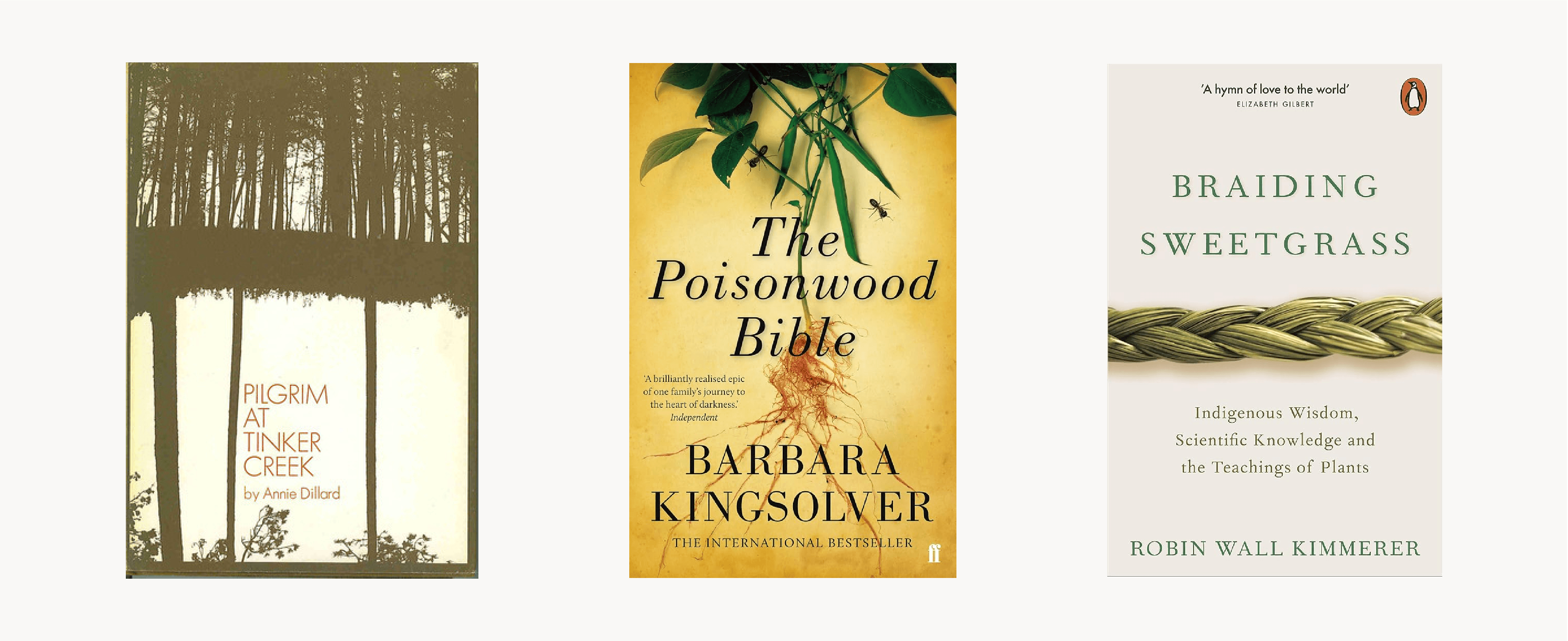
Annie Dillard – Pilgrim At Tinker Creek, 1974
The winner of the Pulitzer Prize for Nonfiction after its release, Annie Dillard’s memoir of a year takes place at Tinker Creek, just outside Roanoke in Virginia's Blue Ridge Mountains. Reflecting on the changes during the four seasons narrator with various contemplations on nature, flora, and fauna, faith and humanity, it was compared to the work of Thoreau and is considered one of the finest works of modern naturalist writing.
Barbara Kingsolver – Poisonwood Bible, 1998
One of Kingsolver’s earlier and most admired novels, Poisonwood Bible is a story told by the wife and four daughters of Nathan Price, a fierce, evangelical Baptist who takes his family and mission to the Belgian Congo in 1959. They carry with them everything they believe they will need from home, but soon find that all of it is calamitously transformed on African soil. What follows is a suspenseful epic of one family's tragic undoing and remarkable reconstruction over the course of three decades in postcolonial Africa, all the while interspersed with deep connections to the land and nature.
Robin Wall Kimmerer – Braiding Sweetgrass, 2013
Drawing on her life as an indigenous scientist, a mother, and a woman, Kimmerer’s book is a showcase of how other living beings, from strawberries to algae to sweetgrass, offer us gifts and lessons, even if we've forgotten how to hear their voices. In a rich braid of reflections that range from the creation of Turtle Island to the forces that threaten its flourishing today, she circles toward the argument that the awakening of a wider ecological consciousness requires the acknowledgment and celebration of our reciprocal relationship with the rest of the living world.
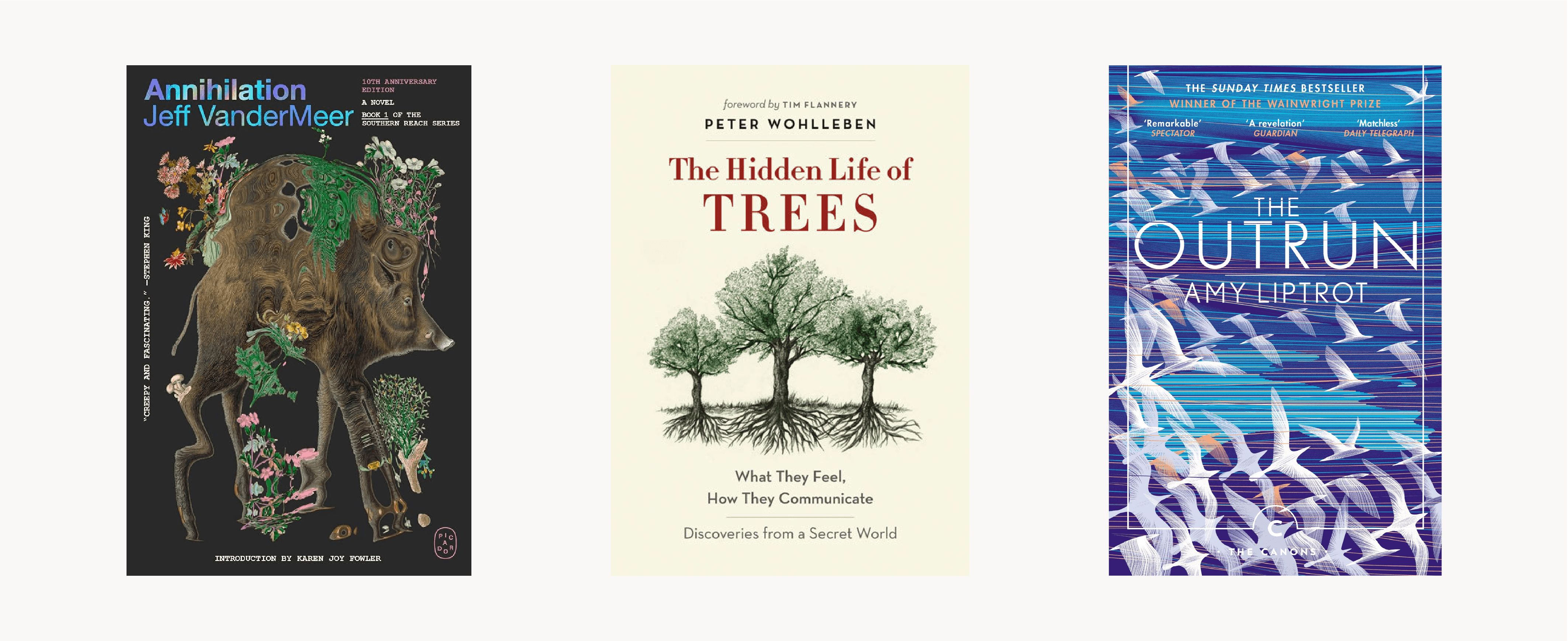
Jeff Vandermeer – Annihilation, 2014
A cult classic that goes beyond science fiction, this book draws upon nature and imagination in novel ways. Area X has been cut off from the rest of the world for decades. Nature has reclaimed the last vestiges of civilization. The first expedition returned with reports of a pristine, Edenic landscape, the second ended in mass suicide, the third in a hail of gunfire as its members turned on one another. The members of the eleventh expedition returned as shadows of their former selves, and died within weeks. In Annihilation, the first volume of Jeff VanderMeer's Southern Reach Trilogy, we join the twelfth expedition and explore a fictional world that sounds suspiciously like the one humanity is quickly destroying.
Peter Wohlleben – The Hidden Life of Trees, 2015
A surprise hit when it released, this nonfiction account by Wohlleben shares his deep love of woods and forests, explaining the amazing scientific processes of life, death, and regeneration he’s observed in the woodland. Much like human families, tree parents live together with their children, communicate with them, and support them as they grow. Drawing on groundbreaking new discoveries, Wohlleben presents the science behind the secret and previously unknown life of trees and their communication abilities; he describes how these discoveries have informed his own practices in the forest around him. Expanding upon this leads to questions about the health of our planet and the essential role of trees in the mental and physical health of all on Earth.
Amy Liptrot – The Outrun, 2015
At the age of thirty, Amy Liptrot finds herself washed up back home on Orkney. Standing unstable on the island, she tries to come to terms with the addiction that has swallowed the last decade of her life. As she spends her mornings swimming in the bracingly cold sea, her days tracking Orkney's wildlife, and her nights searching the sky for the Merry Dancers, Amy discovers how the wild can restore life and renew hope in a unique and memorable memoir.
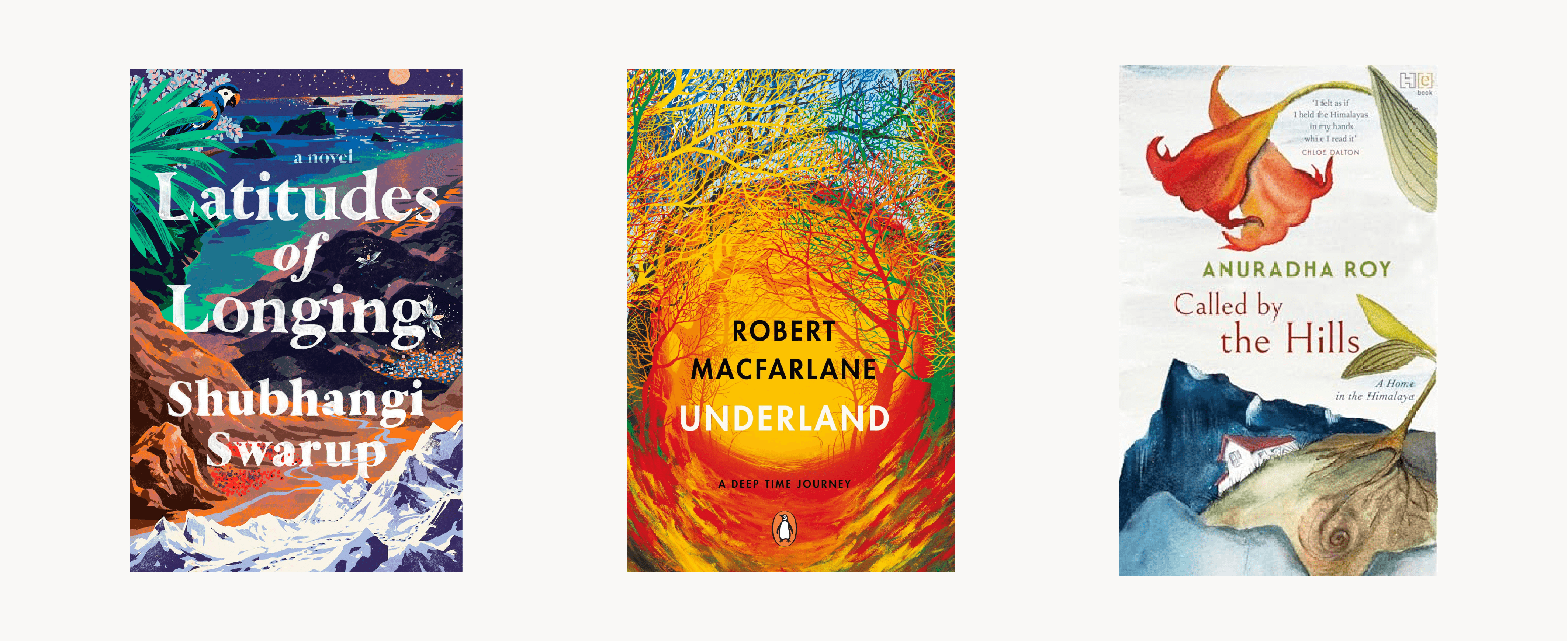
Shubhangi Swarup – Latitudes of Longing, 2018
A sweeping, lyrical debut about the love and longing between humanity and the earth itself, Latitudes of Longing follows the interconnected lives of characters searching for true intimacy. The novel sweeps across India, from an island, to a valley, a city, and a snow desert to tell a love story of epic proportions. We follow a scientist who studies trees and a clairvoyant who speaks to them; a geologist working to end futile wars over a glacier; octogenarian lovers; a mother struggling to free her revolutionary son; a yeti who seeks human companionship; a turtle who transforms first into a boat and then a woman; and the ghost of an evaporated ocean as restless as the continents. Binding them all together is a vision of life as vast as the universe, drawing upon the landscapes of a vast nation.
Robert Macfarlane – Underland, 2019
From the vast underground mycelial networks by which trees communicate to the ice-blue depths of glacial moulins, and from North Yorkshire to the Lofoten Islands, Robert Macfarlane traces a voyage through the worlds beneath our feet. He reaches back into the deep history of the planet, through the layers of rock and ancient buried objects, and forward to the future, the legacy of the anthropocene and the world we bequeath our descendants. Underland is Macfarlane at his dazzling best - the lyrical, the political and the philosophical come together in this profound exploration of the relationship between landscape, the natural and the human heart.
Anuradha Roy – Called by The Hills, 2025
When novelist Anuradha Roy and her husband stumble upon a derelict cottage in Ranikhet, they decide it is where they will now live. Leaving behind frantic Delhi, she is initially bemused by the gentle pace of life in the mountains. Before long, however, she is won over: spellbound by the landscape, taken to the heart of her sometimes recalcitrant neighbours and adopted by four mountain dogs and counting. Over twenty-five years, as Roy becomes accustomed to living among forests, leopards, valleys and mountains, encountering nature at its most fierce, beautiful and vulnerable. Called by the Hills: A Home in the Himalaya is a tender and intimate portrait of a home, a community and a landscape.
Share