
Published on
With the football season coming to an end, a seismic outpouring of joy after a long-awaited Arsenal league victory, and the World Cup just around the corner, what better time to select some of our favourite football reads? From fiction to reportage to analysis to various other things, the most popular sport in the world has always generated plenty of literary and not-so-literary material. We’ve selected some essential picks for those who enjoy the beautiful game.
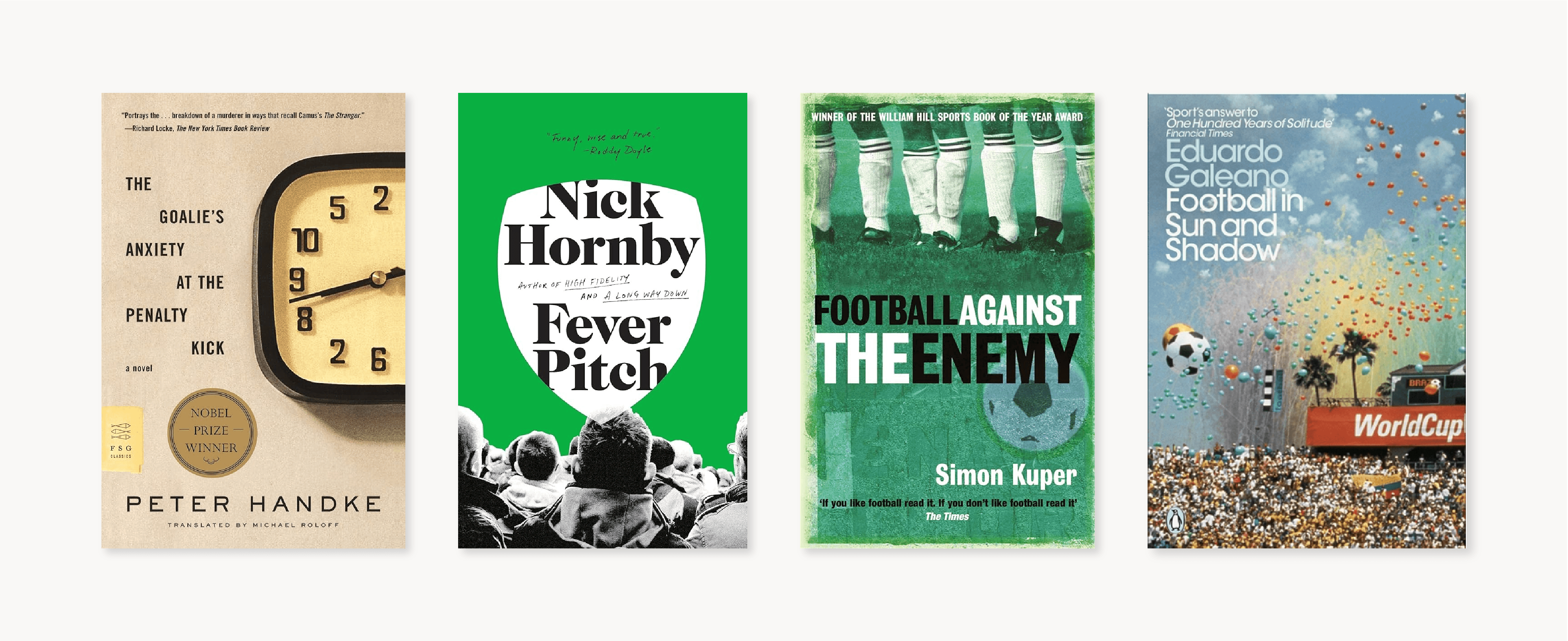
Peter Handke – The Goalie’s Anxiety at the Penalty Kick (1970)
Despite the title, this short novel by Nobel Prize winner Peter Handke is only tangentially linked to football. It is, nonetheless, a modern classic that portrays the self-destruction of a soccer goalie turned construction worker who wanders aimlessly around a stifling Austrian border town. Adapted for film by none other than Wim Wenders, this is a disquieting, fragmented book that charts a man’s descent into madness.
Nick Hornby – Fever Pitch (1992)
It’s no surprise that one of the greatest football books of all time makes it to this list. Taking his devotion to the game as one of few constants in a life where the meaningful things – like growing up, leaving home and forming relationships, both parental and romantic – have rarely been as simple or as uncomplicated as his love for Arsenal, Hornby paints a memorable picture of the fan. In doing so, he evokes all the emotions and challenges of being a fan, charting supreme highs and dreadful lows with aplomb.
Simon Kuper – Football Against the Enemy (1994)
Published to coincide with the 1994 World Cup, Kuper’s book is the record of a journey through Europe, Africa and the Americas, drawing upon his journalistic experiences observing the relations between politics, culture and football. Meeting with a remarkable variety of football fans, from the East German dissident whose crime was to support a West German team, to an Argentinean general with his own highly personal views of tactics - this book may be old but it provides an introduction to the political, religious and cultural forces always interacting with the beautiful game.
Eduardo Galeano – Football in Sun and Shadow (1995)
This unashamedly emotional history of football is a homage to the romance and drama, spectacle and passion of a 'great pagan mass'. Written by one of Uruguay’s finest literary figures, it’s filled with tales of superstition, heartbreak, tragedy, luck, heroes and villains, those who lived for football and those who died for it. Galeano celebrates the glory of a game that - however much the rich and powerful try to control it - still retains its magic.
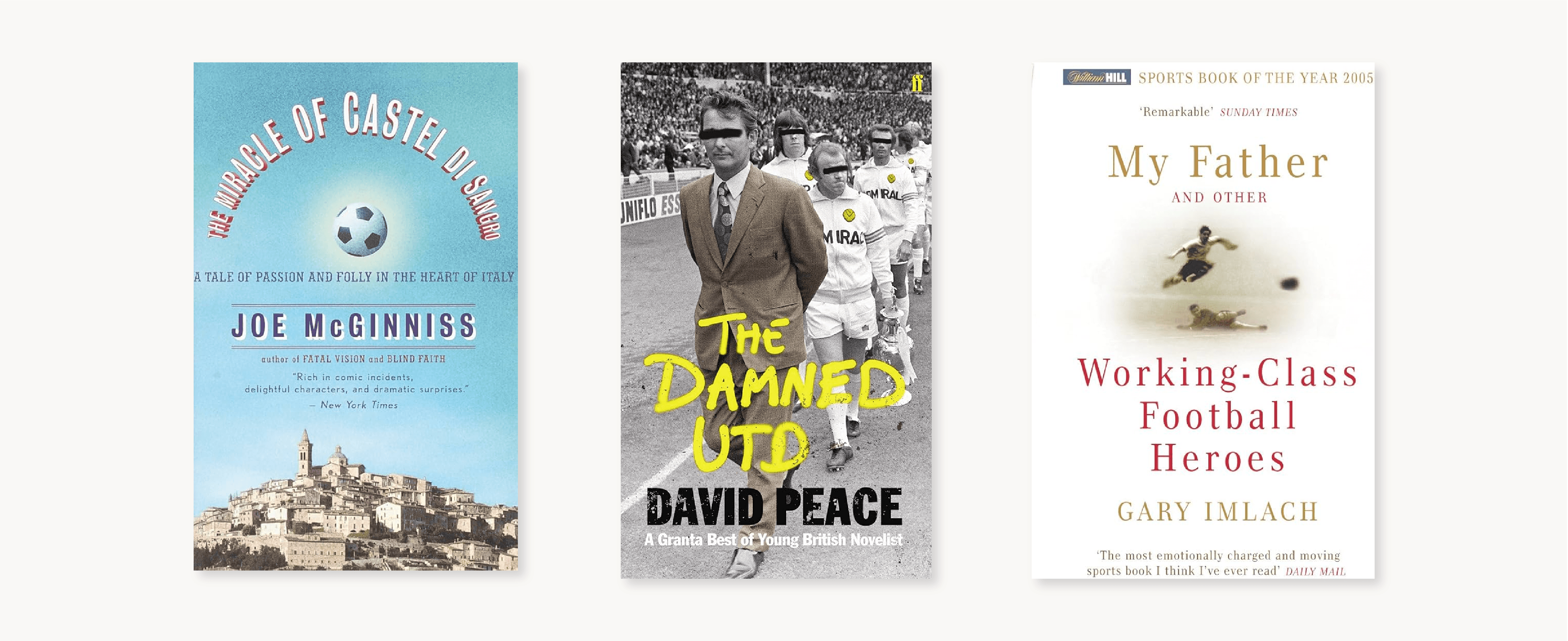
Joe McGinniss – The Miracle of Castel di Sangro (1999)
A book that transcends football and uses it as the basis for telling a human story, McGinniss’ account of the 1997 season, of the tiny team of Castel di Sangro in Italy is a blend of reportage, memoir and social commentary. McGinniss doesn't just report on the wonderful sporting story of a team of minnows one promotion away from the world's best league; he becomes part of the ‘family’ of the club, living opposite the manager, befriending the players, dining at the team restaurant, even having a strained relationship with the shady ownership. Within the town of just 5,000, it showcases everything from football to scandal, racism to communism, corruption to human connection, and does so with panache.
David Peace – The Damned United (2006)
One of the most famous football books of all time, also adapted for film, The Damned United is a dazzling first-person novelization of Brian Clough's extraordinary and ill-fated 44 day tenure as the manager of Leeds United. Exploring the dark heart of football, 70s England, Yorkshire and Leeds in particular, it’s an account of a difficult episode in the life of a disturbed genius, who happens to be one of football’s greatest ever managers. Although the book is fiction, it draws upon extensive research and a deep understanding of both the game and human nature.
Gary Imlach – My Father and Other Working Class Football Heroes (2006)
Though it appears to be a memoir of a man trying to understand the career of his late father, who played for Everton, Scotland and worked as a football coach, this book grows into an absorbing, beautiful reflection on how football, and by extension Britain and working-class tradition, has changed so much since the 1950s. Through the portrait of Stewart Imlach, who thrilled the crowd on Saturdays, then worked alongside them in the off-season, who represented Scotland in the 1958 World Cup and never received a cap for his efforts, it uses the journey of one man to explain the trajectory of modern football.
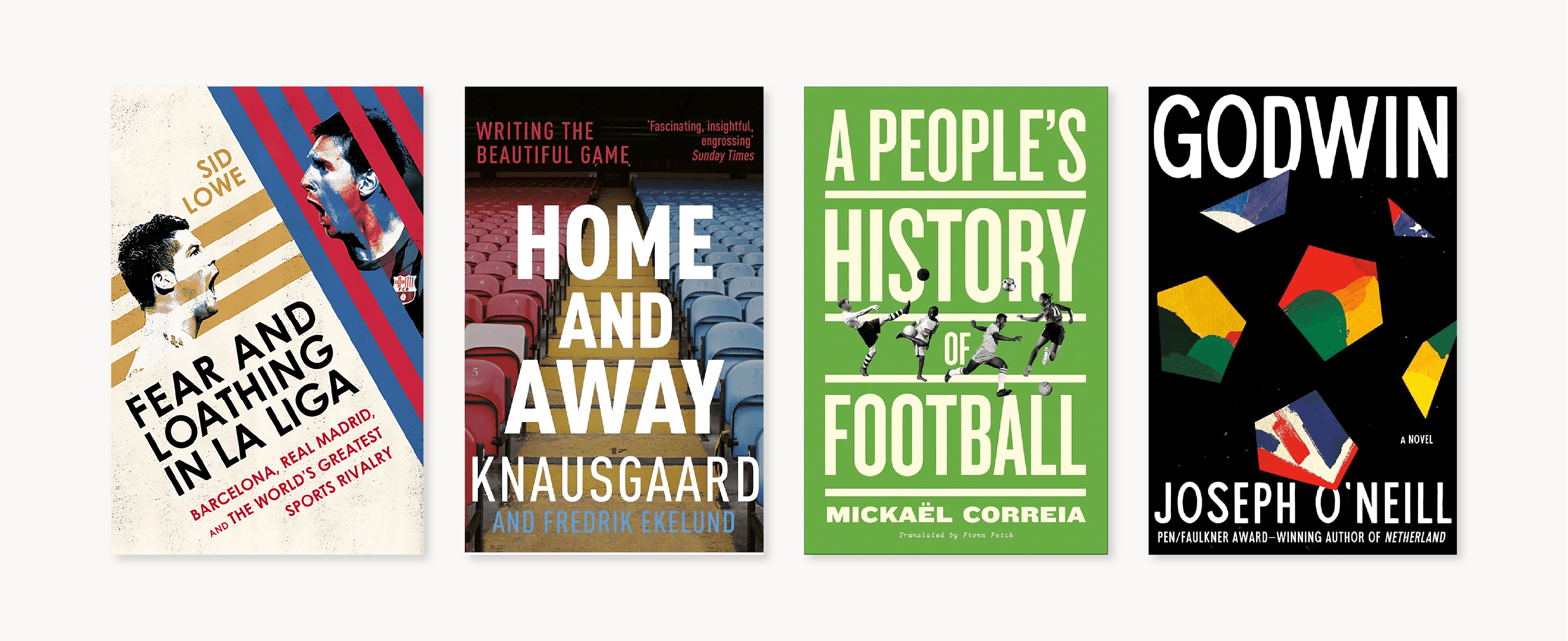
Sid Lowe – Fear and Loathing in La Liga (2014)
Real Madrid and Barcelona. Probably the two biggest clubs in the world, covered by arguably the finest football journalist of our times. From the wounds left by the civil war to the teams’ recent global domination, historian and Spanish football expert Sid Lowe lifts the lid on sport’s greatest rivalry. Lowe has spoken to the biggest names and the forgotten heroes who defined their clubs. Exploring the history, politics, culture, economics and language, while never forgetting the drama on the pitch, Lowe demonstrates the symbiotic nature of the relationship between Spanish football’s two giants, and in doing so reveals the human story behind their rivalry.
Karl Ove Knausgaard and Fredrik Ekelund – Home and Away (2016)
An interesting and unique book, Home and Away is a series of letters between two Scandinavian writers over the course of the 2014 World Cup. Karl Ove Knausgaard is a brilliant literary figure who likes 0-0 draws, cigarettes, coffee, and Argentina. Fredrik Ekelund is in Brazil, where he plays soccer on the beach, watches matches, loves caipirinhas and fluid attacking play. Their exchange uses the World Cup in Brazil as the baseline for reflections on life and death, art and politics, class and literature. What does it mean to be at home in a globalized world, and how does football represent so much of it?
Mickael Correia – A People’s History of Football (2023)
Going beyond the billionaire owners and eye-watering transfer fees that dominate headlines, beyond the Premiership and World Cup, Correia has dived into various football countercultures to illuminate other sides of the beautiful game. From England, France and Germany to Palestine, South Africa and Brazil, this book reveals how football’ has been a powerful instrument of emancipation for workers, feminists, activists, young people and protesters around the world. Countering clichés about football fans, Correia explores everything from English hooligans to the ultras who played a central role in the Arab Spring to the rise of community-owned clubs, reminding us that football can be both generous and subversive.
Joseph O’Neill – Godwin (2024)
A novel that uses football as a way to explore global capital, colonialism and the individual, Joseph O’Neill’s latest book is an odyssey of two brothers crossing the world in search of an African soccer prodigy who might change their fortunes. Mark Wolfe, a brilliant if self-thwarting technical writer, lives in Pittsburgh with his family. His half-brother Geoff, born and raised in the UK, is a desperate young soccer agent. He pulls Mark across the ocean into a scheme to track down an elusive prospect known only as “Godwin”—an African teenager who could be the next Messi. The journey is as much as about international business, the way we live today and exploitation as it is about football, but it’s well worth a read.
Share


