Published on
Iran has been in the news for many weeks now, at the heels of an unjust war and global chaos. It’s a difficult time for a country that has faced many upheavals in recent years, but remains one of the oldest and most cultured civilizations in the world. So we thought it’s as good a time as any to share a reading list of some of the most significant works of Iranian literature from the past century to now.
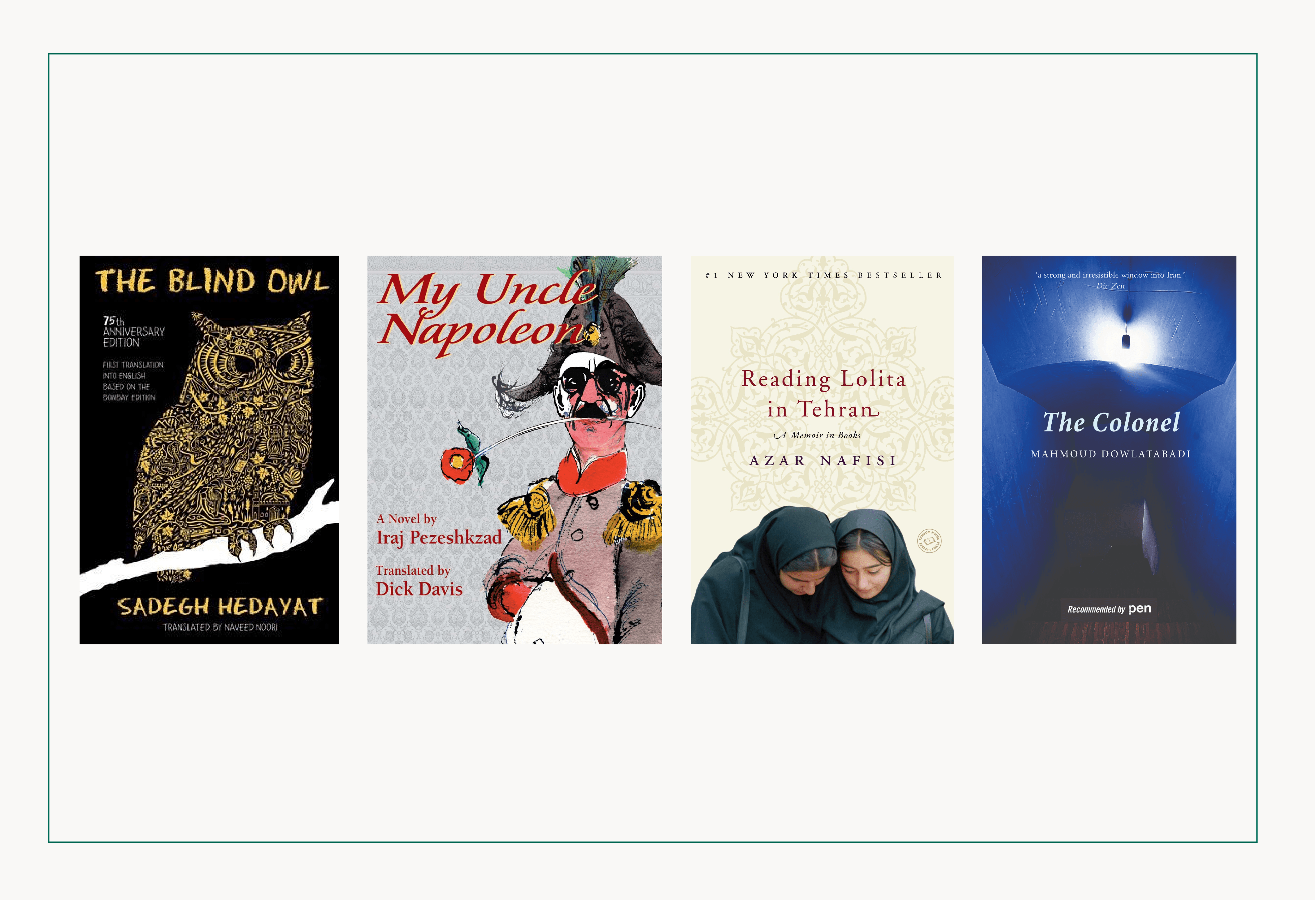
Sadegh Hedayat – The Blind Owl (1936)
Published nearly a century ago, but still one of the greatest modern Iranian novels ever written, The Blind Owl tells the story of a young pen-case painter and his heartbreak. Interestingly, the book was originally self-published in Bombay with just 50 photocopied, stapled booklets made. Years later, after being banned, translated and revived, it has become a classic. Isolated and alone, the unnamed narrator recounts fragments of memory, imagination and hallucination that paint a bleak vision of humanity.
Iraj Pezeshkzad – My Uncle Napoleon (1973)
A coming-of-age novel published in Tehran in Persian in 1973, My Uncle Napoleon was adapted for TV, banned following the Revolution of 1979, and remains an essential and popular Iranian text. The novel takes a satirical and heartfelt approach to first love, extended families, eccentricity and more, centered around a teenage narrator who falls in love with the overprotected daughter of his uncle, mischievously nicknamed after his hero Napoleon Bonaparte, in 1940s Tehran.
Azar Nafisi – Reading Lolita in Tehran (2003)
Perhaps one of the best known works from Iran, Azar Nafisi’s memoir in books is about eight women who meet in secret to discuss forbidden works of Western literature. As they lose themselves in the worlds of Nabokov, Austen and Fitzgerald, they come to share their own stories. Based on Nafisi’s own experiences as a professor of literature in Iran, this is a moving, passionate testament to the transformative power of books.
Mahmoud Dowlatabadi – The Colonel (2009)
On a dark, rainy night in a small Iranian town, the Colonel is immersed in thought. Memories are storming in. Memories of his wife, of patriots of the past, assassinated or executed, and of his children, who joined different factions of the 1979 revolution. Then, a knock on the door as two young policemen summon the Colonel to collect the tortured body of his youngest daughter, and bury her before sunrise. Dowlatabadi’s riveting tale is an account and a critique of the revolution and what comes after, and a memorable, haunting book.
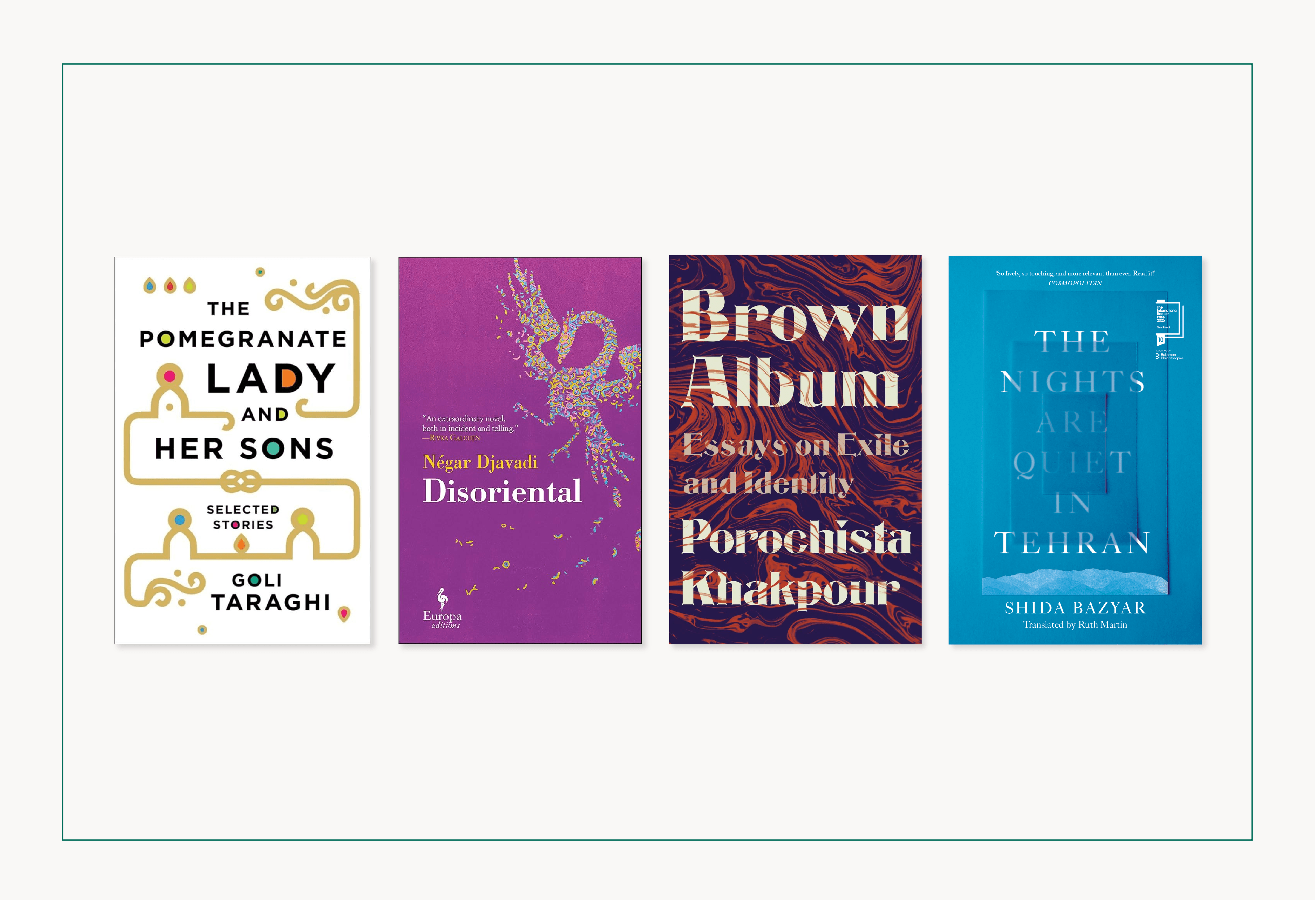
Goli Taraghi – The Pomegranate Lady and Her Sons (2013)
A collection of short stories from one of the finest contemporary Iranian writers, Taraghi is excellent at developing characters and tales that linger. Drawing on childhood experiences in Tehran during the reign of the Shah, her exile in Paris, and subsequent visits to Tehran after the revolution, the stories in this collection explore various aspects of the lives of Iranian women and misfits. Exploring different segments of society and themes, these are masterful tales that deserve the acclaim.
Negar Djevadi – Disoriental (2018)
A novel translated from the French, Disoriental is a beguiling and intelligent book that jumps between time and place. From her grandmother’s birth in a late 19th-century harem in northern Iran, through Kimia’s Tehran childhood, to her present incarnation as a 25-year-old French-Iranian punk fan. Within this, we also discover a great deal about Iranian history, from imperialist assaults to revolts to repression and much more. It’s an impressive debut that is worth reading.
Porochista Khakpour – Brown Album (2020)
From an acclaimed Iranian-American novelist and essayist, Brown Album is a collection of autobiographical essays about being, immigration, identity and exile in the 21st century. Khakpour is a powerful writer, and her essays thoughtfully illustrate what it's like to be caught between cultures, from the moment of her parents’ immigration after the Iranian revolution to feeling like a misfit in California to the shifts after 9/11 to becoming a writer and the present moment.
Shida Bazyar – The Nights are Quiet in Tehran (2025)
A captivating, polyphonic novel that is set over a few decades, this International Booker nominee is the story of one family’s flight from and return to Iran. From Behsad, a communist revolutionary whose hopes are dashed in 1979, to his wife Nahid in 1989, who is adapting to a new language and culture in West Germany. Subsequent sections introduce their children and more family members, as the book explores a sprawling family, the loss of culture, patterns and more with incisive care.
Share


