Published on
Paru was ten years old, agog, and roused from her afternoon nap. Her neighbour, who Paru had, in turn, roused from her nap, took no more than half a dozen seconds to regain her composure when Paru told her that her grandmother had died.
‘Paru, wait. Do you have incense sticks at home?’
‘I don’t think so, aunty. Mummy might have scented candles. Why?’
‘Candles won’t do. We are not setting the table for a romantic dinner. Have some respect.’
‘She only just died, aunty. She isn’t even cold yet. It will be a while before she starts smelling.’
‘It’s not for that. You are too young to know all this. But you have already seen death. Might as well tell you. Corpses fart. And you vegetarians eat so much dal. Wait here. I might have a box of agarbattis in the puja room.’
When Paru came back home with a group of neighbours, Nisha had already made several phone calls and more people were on their way. The only doctor in Gooday Nagar who agreed to come, braving death by Covid, to certify Nisha’s mother as dead, was a distant relative.
Someone had placed a pair of marigold garlands on Aai’s body. Someone else had stuffed cotton wool in her nostrils.
Someone had hidden the sight of setting rigor mortis by covering her up to the neck with a sheet. A handful of incense sticks, stuck in a glass of rice, stood emanating thick rose-scented smoke beside the remains of Nisha’s mother who was now being referred to as ‘it’.
As they were brahmins, the cremation would be quick.
They wouldn’t have to wait for every relative from Sangli to Seattle to arrive. Travel had been rendered difficult owing to the pandemic anyway, and other castes were learning to perform hasty funerals too. So, there was no need to rent a refrigerating glass coffin from the municipal hospital.
Only the overweight and the ones who had had knee replacement surgeries sat on chairs. Everyone else sat cross-legged on a dhurrie on the floor.
‘How old was she?’ someone asked.
‘Sixty-nine last September.’
‘Virgo?’
Someone sniggered at the back. There were a few stifled chuckles. Nisha ignored them.
‘No. Libra’
‘Ah … the sensuous sign,’ someone whispered not realizing it was audible. One look from Nisha made the speaker wish she hadn’t said it.
‘Punya-cha maran,’ was the first utterance of praise for the dead. ‘Death fit for a saint this is.
Grace in death is accorded only to a lucky few. She did not suffer a minute more than was necessary. Was never bedridden. Never had to use a bedpan.
May God grant us such ends when our time comes.’
‘Hmm … mmm,’ was the murmured agreement from everyone.
The only person visibly crying was a contemporary of the deceased. She lived in the apartment directly below theirs and hadn’t heard a thing since 2010. She wiped her eyes with her dupatta and sniffled. ‘I will miss her morning riyaaz. Her voice is a national loss …’ She hugged herself as she made her lament.
Old-man Barret, who had acquired his name from the beret he wore at all times while walking the apartment lawns at odd hours, chimed in after seeing the woman hugging herself.
‘Yes. It’s terribly cold these days. That is what took her, I’m sure.
However strong you are, the cold catches your bones after sixty winters. I’m tired of frequenting the bathroom myself.’
He hadn’t heard much since 2012 either.
‘Yes,’ nodded the deaf connoisseur of song. ‘Me too. I wonder when it will end. It is all the government’s doing.’
Seeing the others go quiet and pay special attention to the obscure patterns on the dhurrie, the duo decided they must extend the lament further.
‘Did she have arthritis? I do. The doctor said it’s a rare variety.’
‘One in a million. A gem.’
‘Can’t agree more.’
‘Swell woman she was.’
‘… swelling in the joints … terrible.’
The mourners struggled to keep a straight face through the inadvertent mirth in the banter of the deaf and looked imploringly at Nisha who took the cue.
‘Aai … my aai. Why so soon?’ she wailed and shed chubby tears. They all turned to her, patted her on the back and cried sympathetically with her.
The doctor had been sitting quietly in a corner by himself.
Having discharged his professional duties, he wasn’t obliged to stay. But he had stayed nonetheless. He motioned for Nisha to follow him into the bedroom.
‘I’m sorry for your loss,’ he said when they were alone.
Nisha nodded sombrely. ‘I had no idea there was anything wrong with her heart,’ she said.
‘It wasn’t that bad actually. It was a minor heart attack.’
‘Minor? Then how did it kill her?’
‘It didn’t.’
‘What do you mean?’
‘You know perfectly well what I mean.’
‘Doctor, my mother just died. I don’t like your tone. What are you implying?’
‘Recount to me the events of her death.’
‘Well, I was in the other room logged on to work. I had a video conference. Paru was taking a nap. She wakes up early to study these days and feels sleepy in the afternoons.
Aai was sitting beside her, on her bed, and listening to a recording of her own performance on the new tablet I got her. She was using headphones as she didn’t want to disturb Paru. I suddenly heard Paru exclaim. She came running to me and said aai had collapsed. I rushed to her and she was clutching her chest. Her voice was feeble and she complained of a wringing feeling in her left arm. I lay her down, undid her blouse and massaged her chest. But her breath was growing faint. I thought she was trying to say something. I put my ears to her lips and heard her ask for Gangajal. I think she realised her time had come and wanted the libation of the Ganga to cleanse her of her sins.’ Nisha paused there for a second before continuing. ‘I asked Paru to fetch the Gangajal from the puja room. I broke the seal of the copper pot and poured some into aai’s mouth. There was a gurgling sound and it spilled out of her mouth. Aai tried raising her head, but I realised she needed help drinking, and gently held her down and poured some more. This time it went down quickly. Aai writhed a little but suddenly stopped moving. I didn’t know what to do. I was in shock. I hugged Paru and sat there for a long time. I would have sat like that forever if Paru hadn’t pulled away after a while and suggested that we call people. I saw aai’s open, unseeing eyes. It was horrible. I closed them with my hands and started calling people.’
‘Well …’ said the doctor. ‘She might have survived the heart attack had she not choked on the Gangajal.’
Nisha stared.
‘I won’t tell anyone,’ he smiled, ‘if that’s what you want.’
Something about his expression told Nisha he wasn’t being very sympathetic. She wiped away her tears and looked at him
sharply.
‘Your wife is my brother-in-law’s cousin.’
‘So?’
‘That practically makes me your sister.’
‘No, it doesn’t.’ He placed his hand on her shoulder. ‘No one need know.’
She shrugged his hand off. ‘Fuck off!’
She walked out, trying to convert the red rage on her face to grief.
‘What happened?’ One of the many assembled neighbours asked her once she resumed her place.
‘The doctor demanded extra money.’
‘How terrible! Has he no grace?’
The doctor walked out of the room to the collective glare of indignant mourners. He hung his head and left without saying goodbye.
‘Have you called your sister?’ Someone asked after a long silence.
‘Yes. She has set out. But she will need a health test and clearance certificate to cross the state border into Gooday Nagar. She has contacts, so I am not too worried. But even then, it will be a while before she gets here.’
‘Are you not going to wait for her before performing the cremation?’
‘No.’
A priest known to be flexible and easy-going was summoned to perform the last rites. The rituals, already rendered threadbare by the pandemic, were further abridged upon Nisha’s request. When she asked to be allowed to light her mother’s pyre, there was no protest. These acts of religious reformation had been in vogue among urban folks for a while now and were not seen as aberrations anymore. Although not quite the norm when there was a son in the picture, a daughter submitting the body of a parent to flames when she had no, or only female, siblings was seen as an act of righteousness.
It was a cold evening and everyone went home after accompanying Nisha back from the cremation grounds. A neighbour brought rice and a pot of highly seasoned aamti and a thermos of Bournvita. Another neighbour promised to bring breakfast the next morning. When deaths rendered hearths unlightable for three days, neighbours made sure the next of kin were fed. Although Nisha was doing intermittent fasting, and had not eaten a single dinner in two years, the emotional toll of the day left her drained, and she welcomed the comfort of hot food. Nisha and Paru finished the rice and aamti in two helpings each. Nisha poured out a mug of Bournvita for Paru and fixed herself a drink. They huddled together in the large, four-poster bed that had been in the family for several generations.
‘Mummy, why did you hate aaji so much?’
‘I didn’t hate her.’
‘She said you did.’
Nisha looked at her daughter with an expression of sadness and concern. But she knew it was not Paru’s fault. Her daughter spent more time with her grandmother than with her, and the old woman had filled her head with all kinds of nonsense. The child wasn’t confronting her. She was merely asking for her side of the story.
‘It is not like that Paru. Your aaji wasn’t an easy person to be with. We fought, yes. But I did not hate her. You will understand when you grow up. Ummm … actually you may not. You and I are best friends, aren’t we?’ Nisha smiled.
‘Yes, mummy.’
Nisha’s mind wandered back to the time she had come home after a long day at the office. There had been numbers, ideas, backstabbing, strategy, deadlines, planning and casual sexism weighing on her. It hadn’t been a difficult day. Just more of every day. It was around 10 p.m. when Nisha turned the key in the door of their apartment and softly walked in, not wanting to wake baby Paru. Aai should have been at the dinner table waiting with cold food and a snide remark. ButNisha walked in to find aai sitting on the couch with one of her nipples stuffed in Paru’s mouth. Upon seeing Nisha, a flustered aai tried to cover her exposed breast with her saree.
‘She wouldn’t stop crying for you. So I thought I would comfort her,’ she began explaining. Nisha snatched the baby from her arms, and Paru promptly started crying. ‘You simply miss having your tits sucked,’ she hissed at her over the din and slammed her bedroom door in her mother’s face.
Aai was crying hotly by then. ‘Don’t talk to me like that, you whore! You think I don’t know who Paru’s father is?’ she screamed at the closed door.
‘You do, do you?’ came the reply from within ‘And do you know who is mine?’
That was years ago. She wished there was someone to talk to and distract her from these uncomfortable memories of her mother.
Paru was asleep when Nina arrived. Nisha was sitting on the armchair in the corner of the drawing room, beside the handmade lampshade, staring into space. They hugged without comment. Nina set her bags down.
‘Naresh and the boys?’ Nisha asked, more as a formality that anything else.
‘Naresh is travelling for work. Aman has his piano lessons, and Ahan is just recovering from a fever. His immunity is down, and I didn’t want him to risk Covid infection.’ Nisha nodded. Both of them knew it was a polite fib.
‘Drink?’ Nisha asked her younger sister.
‘Hell yes! With hot water please. I feel a bit of an itch in my throat. It’s cold.’
The Hindu sisters sat down with a bottle of Christian Brothers. After two pegs, Nina put her glass down and gave Nisha a mischievous smile. ‘I hope you made sure she was dead before you cremated her.’
Nisha’s look went from horror to mirth in a second. They burst out laughing but quickly covered their mouths and shook with noiseless giggles. Laughter wasn’t allowed in a house visited by death for thirteen days.
When the fountain of laughter subsided, Nisha sighed.
This sudden gust of irreverence felt good. She couldn’t remember when they went from being close sisters to formal friends—from pulling each other’s pigtails to exchanging hollow pleasantries.
‘Have you told Prashant?’ Nina asked, as if on cue.
‘Don’t see why I should. There has been nothing between us for years now.’
‘Ummm … akka, may I ask why you didn’t get a divorce?’
‘Dread of paperwork. Neither of us wants to get married again, besides.’
‘What about Paru? Doesn’t he want to meet her?’
Nisha held her sister in a long, steady gaze. ‘You know she isn’t his, don’t you?’
Nina nodded. ‘I had guessed as much. But didn’t want to ask.’
Nisha was silent.
‘So, this is something of a relief, huh?’ Nina asked after a while.
‘I don’t know. Perhaps it is. Too early to say.’
Nina sighed.
‘How are things with you and Naresh?’ Nisha asked.
‘Usual. Y’know … you make your bed with someone, you lie in it.’
‘You could … well … try telling the truth in bed …’
They exchanged sad smiles at Nisha’s meagre attempt at a joke in a humourless situation.
Nisha spoke again after a minute of uncomfortable silence.
‘Kulkarni doctor made a pass at me today.’
‘What??? Despite aai’s death? How awful. Was he trying to make it look like he was offering sympathy?’
Nisha began to say something but changed her mind. ‘Yes,’ she said instead.
‘The bastard,’ Nina said without passion. Silence re-entered the conversation. Nina tried to refill Nisha’s glass but she held her hand over it to keep her from pouring.
‘I think I’m done,’ Nisha said. ‘I started before you came.
There will be fresh condolence givers arriving tomorrow. I can’t receive them with a hangover.’
‘Oh yes. What is worse? Grief or the obligation of gratitude for sympathy?’
‘The only consolation is that the pollution of death means we are not required to offer refreshments to the visitors.’
Nina nodded. There was more silence.
‘She mentioned you more than usual the last few days,’
Nisha said after a long pause.
‘Don’t start the whole premonition story now,’ Nina said and rolled her eyes.
‘No, no. No premonition. She just missed you. She was too proud to call you herself. But you do know you were always her favourite.’
‘Do I know? That’s all I was allowed to know!’
Aai was the last of a long line of thumri singers who, married to their music, needed the patronage of rich men to sustain their art. In this rather harmonious tradition, pain and pleasure were like the Aarohan and the Avarohan—the ascent and descent of notes—necessary and beautiful.
But in the latter half of the last century, this rise and fall of musical notes had hit the boulder of a new morality resulting in an off-key crash. This passion was renamed profession and that brought with it a whole new system of jugaad and judgement—the need to make, unmake, remake and make do. Many gave up singing to seek the respectability of marriage and domestic drudgery. Some turned to singing and acting in films. Some sought the patronage of a new man—the State—and sang to grants and honours. It was an endeavour that was fraught with politics and philistine pins and needling. Aai’s mother was one of the very few who had chosen to play with the ragged ropes of the old order. And when aai took over, she hung by a thread.
Nisha had never known her father. In her rare tender moments, aai told her that he had been a handsome man of refined tastes—and one who loved a good laugh. But Nisha suspected it to be a posthumous image: a wishful sketch of a stranger who paid for a song with a baby. Nina’s father, on the other hand, came into their life when Nisha was about three years old and continued to be a presence for a good many year. He was soft-spoken and gentle. He was the CEO of one of those companies that liked to keep its employees happy by giving them two pints of beer and snacks on Fridays and taking high performers to all-expense paid holidays to Bali.
He was a connoisseur of music and in love with the dusky, doe-eyed aai, but most importantly, he was brahmin.
Although he was kind to Nisha, aai felt obliged to please him by being partial to Nina. While he was ‘baba’ for Nina, aai only allowed Nisha to address him as ‘kaka’. And while he never asked for an account of their expenses, aai made it sound like Nisha’s clothes and education were bought with the leftover change from Nina’s upbringing. The only thing that prevented Nisha from growing bitter through all this was her sister. Sweet, sensitive Nina who resented their mother’s overt doting more than anyone else.
It was when aai was pregnant with Nina that they had they had fresh mutton turned vegetarian. One Sunday, delivered home and when aai opened the lid of the box the meat shook with strong tremors—like it thought it was still sheep. Aai was horrified and gave the meat away to the servant. When she recounted the incident to kaka, he told her that he wanted his child to be raised satvik like himself, and they immediately became vegetarian. They even began calling themselves brahmin. Kaka later told the girls the story of the brave Maratha warrior Tanhaji whose corpse continued to swing its many swords after his head was cut off in a battle with the Mughals. Nisha was not sure why this story was entwined with the mutton incident in her mind.
Nina wanted to study music but was discouraged by aai. And tone-deaf Nisha gave it up after a few sargam lessons. Aai did her riyaz regularly, however, and the girls were allowed to be bored of it—and alternatively, detest it.
Thanks to baba/kaka, the girls did not lack for creature comforts while growing up. They went to good schools and received worthwhile educations. Baba arranged Nina’s marriage to the son of one of his senior employees, another respectable brahmin. But when baba died suddenly a month before the wedding, the groom’s family, rather than return the hefty dowry, very generously offered to go ahead with the wedding on the condition that Nina cut her mother out of her life. Baba’s legitimate family had prevented Nina from inheriting any of his property and faced with an uncertain financial future, Nisha had pushed Nina into accepting her prospective in-law’s terms and leaving the wobbly nest for good. Although aai was secretly happy for Nina’s secure life, she outwardly blamed Nisha for her estrangement with her beloved Nina.
Kaka had left them a house and Nisha supported aai and herself with her job in a bank. There, she met and married Prashant, ten years her senior. Prashant was a good man but nothing more. He had come to live with Nisha and aai. While aai was relieved to have a man about the house, she never let an opportunity pass where she could rub it in Prashant’s face that he was a ghar jamai—a live-in son-in-law—spineless for breaking the honourable tradition of taking his bride to live with his parents. Despite his good salary, which he generously spent on the household, and treating Nisha well, to aai, he could never be as good as Nina’s legend of a husband.
Prashant was quiet and passionless. He never responded to aai’s taunts. But although Nisha always sided with him, he did not give her credit as an ally either. He simply didn’t want the tug to be there, and Nisha, who only knew her mother as a woman o’war, couldn’t imagine peace.
So, when Prashant left, she didn’t stop him. She was just eager to resume her loud fights with her sweet-voiced, but terminally bitter, aai.
The only person for whom Nisha had felt any passion was her lover with whom she had become entangled for a short while soon after Prashant left. They knew the affair couldn’t go on for ever, all along. When it was time to end it, Nisha told him she would love his children as her own and be kind to the slip of a girl who was going to be his wife. She hugged him one last time and wept liberally on his chest. He wept with her but there was no question of breaking off his impending arranged marriage with a girl from his own caste for Nisha, twelve years his senior and still legally married to another man.
Nisha had washed her face, dusted powder on her cheeks, lined her reddened eyes with kohl, and draped the cheap red nylon saree he had bought her and prepared to attend his wedding.
‘You are going dressed like that?’ Aai asked her. ‘You might hide your shame better with silk.’
‘Shame? If you had any yourself, I wouldn’t be born!’
When Nisha discovered she was pregnant, Prashant, in his usual wordless way had come back to stay with them for a month—giving her pregnancy the respectability of a failed reconciliation with the legitimate man. He braved aai’s venom with the same silence with which he accepted Nisha’s gratitude before leaving for good.
And then Nisha had gone on to take an online course in German followed by a one-year weekend class PG diploma in the language, and got a job translating technical manuals in an international company. The job paid her four times as much as her previous bank job, had flexible hours and a two-days-a-week work-from-home option. With that, she managed to keep her mother’s mouth muffled in silken finery and buy her daughter a happier childhood than her own.
She named her Parvathy, the daughter of the mountains.
She would be tall and strong and beautiful. And she grew up so quickly. It was as if she was a character in a plot-ruled story where things happened every second line. All good things, thankfully.
It felt like only yesterday that she had that conversation with her about careers.
‘You know my friend Monika? Her daughter is doing an MS from the US. What is it?’
‘It’s a degree that gets you jobs and things, mummy.’
‘What do they do?’
‘Everything they are told.’
‘Pays well?’
‘Yup’
‘How much?’
‘Forty-eight lakhs.’
‘A year?’
‘If they survive it, yes.’
‘In white?’
‘No. They stand them up like burlesque dancers and flip
wads of cash on them—one banknote at a time.’
‘The world has come a long way since I went to college.’
‘Yup.’
What a delightful, intelligent and witty young woman Parvathy had grown up to be. Nisha saved and invested wisely. She prided herself on giving her daughter a lifestyle where careers are for meaning and motion and inheritance is for surety and sustenance forming the bedrock of art and articulation. Parvathy had a bachelor’s degree in something popular, a master’s degree in something whimsical, and a PhD in something useless. And she threw it all away to pursue music, in which she was very successful. She had raw talent and a little training was all she needed to launch herself on the fusion stage.
Nisha, who had wished safety upon her in the matters of career, love and reproduction, was nonetheless happy that her daughter followed her heart. Parvathy travelled the world and she travelled light. Every journey, she said, was about packing her voice and her two ChapSticks—one scented, one tinted.
She never married and dipped into mankind only for offspring and never heartbreak. And Nisha grew to be an old woman full of nothing. Not even regret. That nothingness proved to be an asset at deathtime.
Nisha drifted out of her reveries to find Nina talking about something.
‘Initially, even I was sceptical. There is so much new-age eyewash out there. But I couldn’t find fault with this idea. I mean, it had no religious connotations, no fancy jargon. All it said was breathe. Focus on your breath as breathing is the only action that is both voluntary and involuntary. You cannot control the beating of your heart. On the other hand, you cannot lift your hand without willing it. Whereas you continue to breathe while you sleep. But you can also regulate the length and depth of your breath wilfully. And that is how it is the bridge between the spiritual and the physical world.
You needn’t do anything, chant nothing, seek nothing. Just sit there. Close your eyes. And focus on your breath. Sense it, feel it, know it. An hour of that and you feel lighter, calmer. It has given me a lot of peace. You must try it too.’
‘Hmm …?’ Nisha said.
Nina noticed Nisha was distracted. ‘Akka, are you okay?’
‘Yes, yes … just tired. It’s been a long day’
‘It’s nearly morning. Let’s get some sleep’.
They went in and lay down on the twin beds. Nina didn’t bother changing out of the clothes she had travelled in. She drove alone and had come dressed in baggy sweatpants and a loose t-shirt.
She simply undid her bra from under her shirt and flung it on the nightstand.
‘Akka …’ Nina whispered.
‘Mmm?’ Nisha said groggily.
‘Sorry if it’s a little too early to say this. But I think you must consider finding someone. You will be lonely. Aai is not there to ruin it for you, besides.’ Nisha didn’t respond for a long time. Nina thought she was asleep and turned on her side to drift off when Nisha finally spoke.
‘I’m not lonely. There’s Paru.’
Nina sat up suddenly. ‘Akka, stop talking like that. You sound like you are beginning to believe your own lies.’ Nisha didn’t reply. Nina came over to her bed and hugged her from behind—something she hadn’t done since they were children.
Nisha pulled Nina’s arm closer. They lay like that for a long time before Nina spoke again.
‘Akka, why did you abort her?’
Nisha said nothing. She finally began sobbing.
***
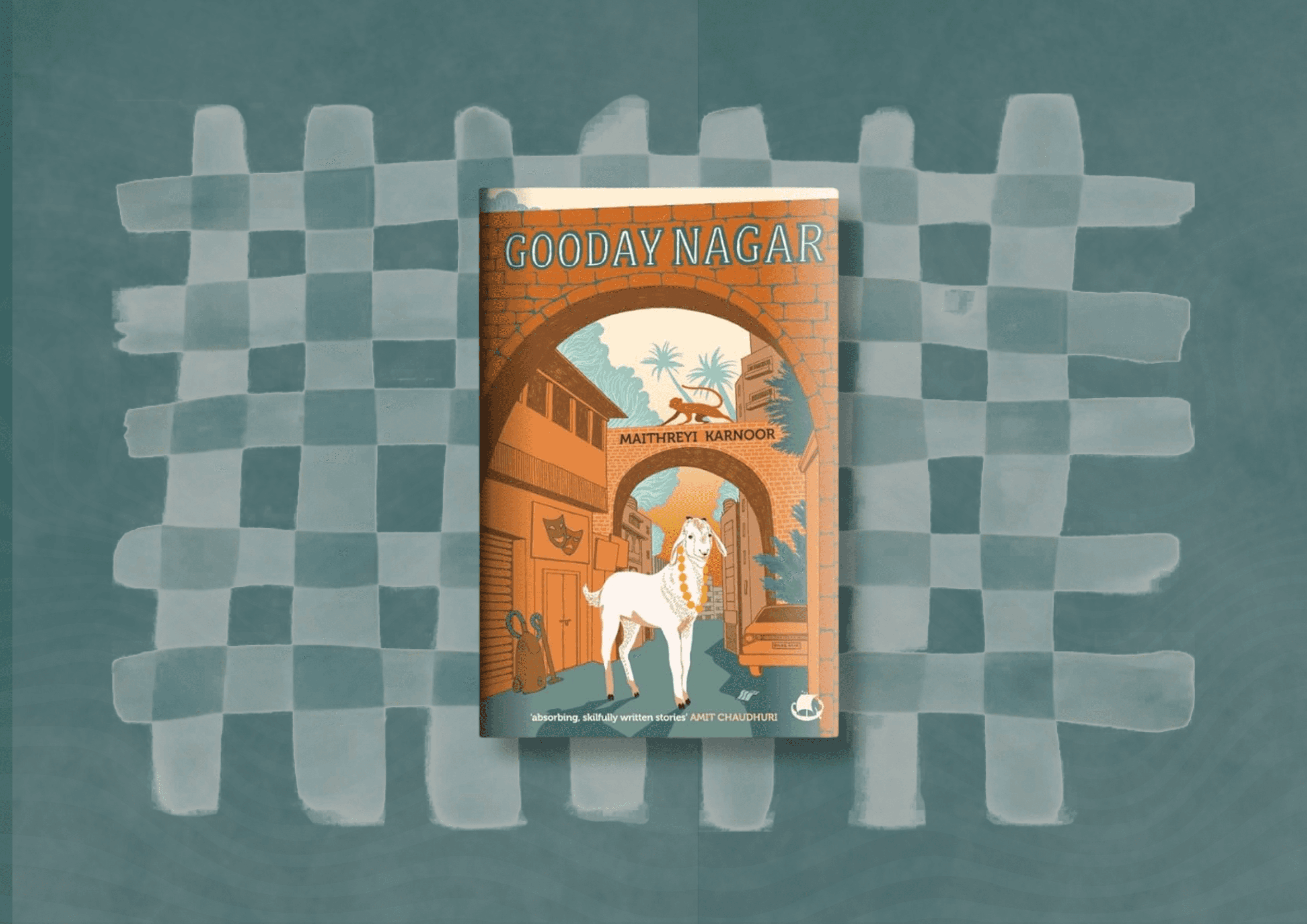
Ladies of Lore is excerpted from Gooday Nagar by Maithreyi Karnoor, published by Westland Books and available now.
Share
Maithreyi Karnoor is the author of the English novel Sylvia, the Kannada novel Hettavara Neralu and the poetry collection Skinny Dipping in Tiger Country. Her English translations of Kannada novels A Handful of Sesame and Tejo Tungabhadra have won the Kuvempu Bhasha Bharati Prize for translation. She is a two-time finalist of The Montreal International Poetry Prize.
Karnoor is a former Charles Wallace India Trust Fellow in writing and translation at LAF and UWTSD. She was born in Hubli and is currently based in Wales, where she is writing her third novel. There will be elephants in it.


